

Yes, most airlines let a cat fly in the cabin if the cat and carrier fit under the seat in front of you. Book a direct flight, reserve your cat’s spot, and carrier-train your cat. This guide walks you through how to fly with your cat.
Flying with a cat sounds stressful, and the first time is. But if you’re learning how to fly with your cat for the first time, the good news is this: most cats settle down once the carrier feels safe and the routine feels familiar. Preparation does the heavy lifting.
You don’t need fancy gear. You need a plan, a carrier your cat trusts, and enough time to get both ready. This guide gives you that plan, plus the gaps other guides skip: seat traps, layovers, bad days, and real costs.
Should Your Cat Fly? Cabin vs Cargo
When to Leave Your Cat at Home
Start with one honest question: does your cat actually need to fly? For a short holiday, a trusted sitter at home is often kinder than a flight. Cats love their own territory, and many owners say their cats barely notice a sitter’s visit.
Cabin vs Cargo: The Honest Comparison
If you’re moving or facing a long trip, flying makes sense. Pick the cabin whenever you can. Your cat stays near you and skips the noise and handling of the hold. Cargo is not automatically cruel, but for most pet cats, the cabin wins.
| In the cabin | In the hold (cargo) | |
|---|---|---|
| Your cat stays with you | Yes, under the seat | No, separate compartment |
| Stress level | Lower for most cats | Higher, plus loading noise |
| Carrier type | Soft-sided, under-seat size | Hard-sided, IATA-style crate |
Your 8-Week Preparation Timeline
Eight weeks gives you room to fix problems, and for cross-border trips, six weeks is the bare minimum other guides mention. Carrier training pays off most, and it costs nothing but patience. Follow this timeline and you won’t be rushing at the end.
| When | What to do |
|---|---|
| 8 weeks out | Pick your airline, check its pet policy, buy the carrier |
| 6 weeks out | Start daily carrier training, book the vet visit |
| 4 weeks out | Book your cat’s cabin spot, practise car rides |
| 2 weeks out | Trial any vet-approved calming aid at home |
| 1 week out | Gather documents, pack, check your seat and aircraft |
| Flight day | Follow this guide’s checklists |
Choose the Right Airline and Book the Cabin Spot
Airline Rules and Booking
Airlines differ more than you’d think. Some cap pets per flight at four to six, and some ban pets on certain routes. Always read your airline’s own pet policy before you book, because third-party blogs go out of date fast.
After you book your own seat, add your cat right away. On many airlines you do this by phone, not online, and cabin pet spots sell out. Ask for written confirmation of your cat’s reservation, and note the name of the person you spoke with.
What the Fees Actually Look Like
2026 US roundups report different fees for the same airlines, which tells you these numbers move. Alaska appears around $100, Southwest $95–$125, American $125–$150, and Delta $95–$200 depending on route. Treat every figure as a ballpark and check your airline’s own page before you pay.
Picking the Right Seat
Seat choice matters more than most guides admit. A window seat means fewer people brushing past the carrier. Never pick a bulkhead or exit row: those rows have no seat in front of you, so there’s nowhere to stow a carrier.
Breed Restrictions to Check
Breed rules catch some owners by surprise. Several airlines restrict flat-faced cat breeds, such as Persians, because these cats can struggle to breathe at altitude. If your cat is flat-faced, check your airline’s breed rules before you book, since a denial at check-in is hard to fix.
The Carrier: Size Rules and the Aircraft Trap
Choosing a Cabin Carrier
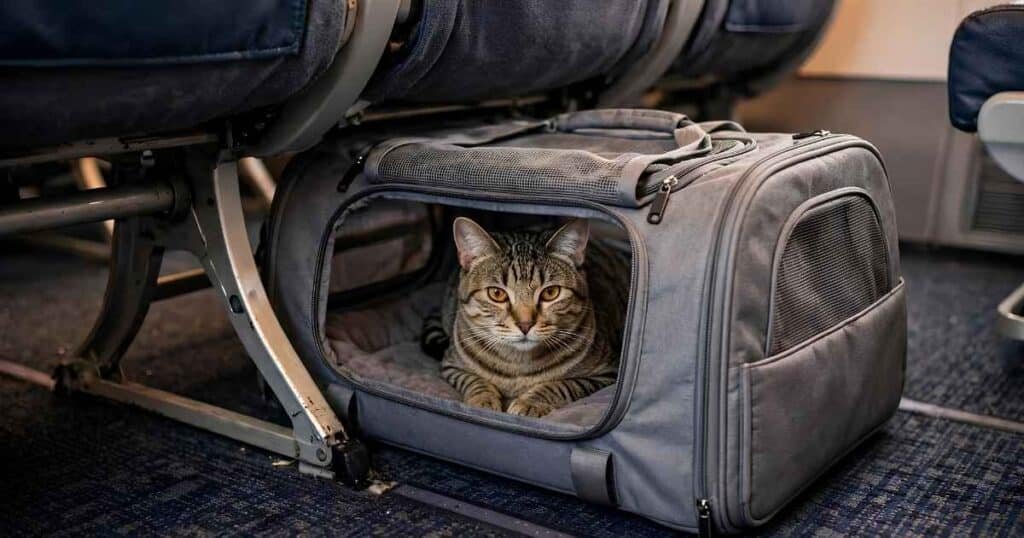
Your carrier is the single most important purchase. For cabin travel, pick a soft-sided carrier that fits under the seat, with airflow, sturdy zips, and room to stand, turn, and lie down. Hard carriers suit cargo, not cabin underseat space.
The Aircraft Trap
Size limits sound simple until you meet the aircraft trap. When you’re planning how to fly with your cat, find your aircraft type in your booking or airline app, because underseat space changes from plane to plane. Measure your carrier against that plane’s space.
Weight Limits
Weight limits trip people up too. Some airlines cap the combined weight of cat plus carrier, often around 20 pounds on US carriers and 8 kilograms on many European ones, while others only require the carrier to fit. Weigh your cat inside the carrier at home.
Vet Visit, Documents, and Health Certificates
Health Certificates and Timing
Book a vet checkup two to four weeks before departure. A health certificate is a separate step, and its validity window varies by destination, airline, and transit route, so confirm the exact window before you book. Most US domestic flights need no health certificate at all.
Vaccinations and Microchip
Bring vaccination records, especially rabies, and confirm your cat’s microchip is registered with your current phone number. A chip only helps if the registry can reach you. For domestic US flights, many cats need no extra paperwork, but international trips bring import rules and longer lead times.
Kittens, Seniors, and Special Needs
Kittens, seniors, and cats with health problems need extra care. Many airlines set a minimum age for flying, often around eight to ten weeks, and older cats may need extra checks. If your cat takes daily medicine, ask your vet how to time doses around the flight.
The Great Britain Exception
One international trap deserves its own warning. Cats flying into Great Britain (England, Scotland and Wales) cannot travel in the cabin on normal passenger flights, subject to official rules and exceptions. They must travel as cargo, so plan for that rule before you book a Great Britain trip.
Keeping Your Cat Calm: What Actually Works
Trial Any Calming Aid at Home
If your vet prescribes gabapentin for anxiety, trial the dose at home first, ideally a couple of weeks before travel. You want to learn how your cat reacts while you’re both safe at home. Never borrow another cat’s medicine, and never guess a dose.
Why Sedation Is Risky
Sedation is where you should be careful. Veterinary groups advise against tranquilizers for air travel, because they can affect breathing and temperature control at altitude. If a friend suggests a sedative that worked for their pet, ignore that advice and ask your vet instead.
TSA Screening Step by Step
The Standard Screening Steps
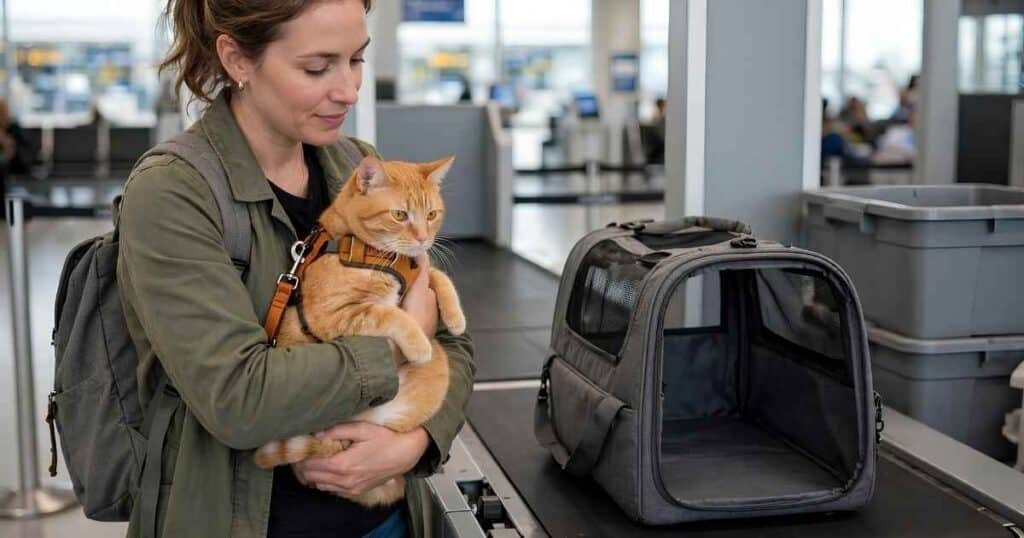
Security scares most first-timers, but it’s manageable. The TSA asks you to remove your cat from the carrier just before screening, send the empty carrier through the X-ray machine, and carry your cat through the metal detector. Never put your cat through the X-ray tunnel.
Preventing an Escape at the Checkpoint
Put a secure harness and leash on your cat before you reach the queue. This is the moment cats escape. Hold your cat firmly against your chest, remove a metal leash before you walk through, and expect a quick swab of your hands.
Asking for a Private Screening Room
If your cat is a known bolter, ask for a private screening room. Officers can screen you and your cat in a smaller, enclosed space. It may take longer, so build extra time into your airport plan and tell the officer your cat may panic.
At the Airport and Boarding
Arrive earlier than you think you need to, with time for check-in, security, and a calm wait at the gate. Find your airport’s pet relief area early, and give your cat a chance to use a portable litter box with familiar litter from home.
During the Flight: Noise, Meowing, and Long Hours
Once You’re Seated
Once you’re seated, slide the carrier under the seat in front of you and leave it there. Don’t open it to comfort your cat. An open carrier in a cabin is an escape risk, and crew will ask you to close it anyway.
Handling Nonstop Meowing
If your cat meows nonstop, try this order: cover the carrier, speak softly, and wait. Most cats on flight cry hardest during takeoff and settle as the cabin noise steadies. Avoid constant petting through the mesh, since it often keeps the cycle going.
Long Flights and Layovers
For long flights, pack a bowl. Offer water and keep a pad under your cat. How long your cat can wait depends on your cat and the flight, so use a familiar portable litter tray at relief areas and ask your vet about long trips. On layovers, offer water.
When Things Go Wrong: A Problems Playbook
Denied Boarding
Denied boarding is the nightmare scenario, and it’s usually about size. If your carrier is too tall for the underseat space or the combined weight is over the limit, staff can refuse the pet. Measure at home, weigh at home, and arrive early.
If your cat escapes at security or in the terminal, stay calm and low. Crouch, speak softly, and let the cat come to you rather than chasing it. Tell the nearest staff member at once, since they can close doors and quiet the area faster than you can alone.
Aircraft changes and missed connections cause quiet chaos. If your plane swaps after booking, recheck the new aircraft’s underseat space before you leave home. If you miss a connection, tell the gate agent at once that you travel with a cat in the cabin.
After Landing: The First 24 to 48 Hours
Open the carrier and let your cat walk out alone. Hiding is normal, and some cats need several days to feel safe. The first days are the forgotten half of how to fly with your cat, so watch for warning signs like refusing food or water, or trouble breathing.
Flying with Two Cats or an Anxious Cat
Two cats mean double planning, since most airlines allow only one pet per passenger in the cabin. Two adults traveling together can each carry one cat, and anxious cats need a longer runway: eight weeks of carrier training, daily play, and short car rides that end back home.
What the Whole Trip Costs
A realistic budget is part of learning how to fly with your cat without nasty surprises at the airport. The airline fee is only one part, since vet visits and the carrier add up. Verify each number with your airline and vet.
| Cost item | Typical range (US, one way) |
|---|---|
| In-cabin pet fee | $95–$200 each way (2026 US roundups; varies by airline and source) |
| Vet visit + health certificate | Ask your vet — varies by clinic and certificate type |
| Airline-approved carrier | $45–$100 for a good soft-sided one |
| Return leg | Same pet fee again |
For a published example, one 2026 UK-focused breakdown listed a carrier at $45–$100 and a health certificate at $115–$255. Those are not US clinic prices, but they show how the paperwork can cost more than the carrier itself. Always get a quote from your own vet.
Packing Checklist: Don’t Leave Without These
Use this list the night before you fly, and tick each item off as it goes into your bag. Pack cat essentials in your carry-on, never in checked luggage, so a delayed bag can’t strand your cat’s supplies on travel day.
- Soft-sided airline-approved carrier with label and zip ties
- Harness and leash, fitted and tested at home
- Absorbent pads, plus spares, and waste bags
- Collapsible water bowl and a small water bottle
- Small bag of your cat’s usual food and a few treats
- Folding litter tray with zip bags of familiar litter
- Health certificate (if required), vaccination records, microchip number
- A worn T-shirt of yours and a familiar blanket
- Pheromone spray (if your vet approves it)
- Your cat’s medication, if any, in hand luggage
Conclusion
Flying with a cat is easier with a plan. This guide to how to fly with your cat comes down to four habits: pick the cabin, train the carrier early, verify the rules with your airline, and allow time. Do those four things well, and most flights pass without drama.
This guide shares general travel information, not veterinary advice. Airline policies, fees, and security rules change often, so always verify them directly with your airline and the TSA before you travel. For health, medication, or anxiety questions, ask your own vet.
Frequently Asked Questions
Yes, on most airlines, if your cat and carrier fit under the seat in front of you and stay within the weight limit. You must reserve your cat’s spot, since cabin pet spaces per flight are limited. Always confirm your airline’s rules before booking.
Book a direct flight, reserve the cabin spot for your cat, and train your cat to love the carrier ahead. Visit your vet for documents, pack a harness and absorbent pads, and carry your cat through security screening. Keep the carrier closed and under the seat during the flight.
There is no fixed safe timeframe. It depends on your cat’s age, health, and the flight length, and many cats refuse to use a tray while traveling. Line the carrier with an absorbent pad, use a familiar portable tray at relief areas, and ask your vet about long trips.
Usually not, and never without veterinary advice. Sedatives can affect breathing, balance, and temperature control at altitude, which is riskier in the air than on the ground. A vet may suggest a mild anti-anxiety medicine like gabapentin, trialled at home first, if it suits your cat.
It depends on the trip. Most US domestic flights need no health certificate, though rabies records help. International rules vary by destination country and transit route, so check your destination’s requirements and USDA APHIS guidance with your airline before you book.

Aliraza is the founder and writer of PetOnTour. As a pet owner, he started the site to make pet travel easier to understand. He turns airline policies, import rules, and travel paperwork into clear, practical steps, so other pet owners can plan with confidence.